Sidebar

BRUTALISM:ONLINE
  • Home
  • Buildings
  • Designers
  • Brutalism
  • Features
  • Twitter
  • Facebook

Alison and Peter Smithson
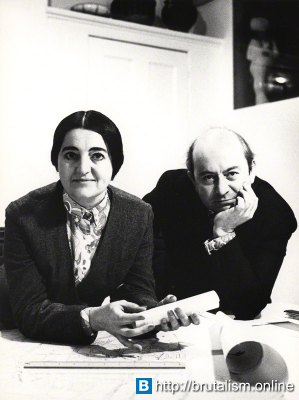
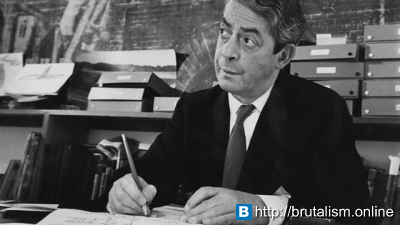
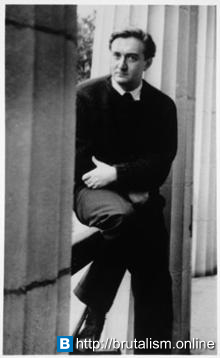
English architects Alison Smithson (22 June 1928 – 16 August 1993) and Peter Smithson (18 September 1923 – 3 March 2003) together formed an architectural partnership, and are often associated with the New Brutalism (especially in architectural and urban theory).

Peter was born in Stockton-on-Tees in north-east England, and Alison was born in Sheffield, South Yorkshire. They met while studying architecture at Durham University and married in 1949. Together, they joined the architecture department of the London County Council before establishing their own partnership in 1950.
Buildings:

  • Robin Hood Gardens, London, England
  • Smithdon High School (formerly Hunstanton Secondary Modern School), Norfolk, England

Denys Lasdun

Probably best known for The University of East Anglia and The Royal National Theatre on London's South Bank of the Thames, which is a Grade II* listed building and one of the most notable examples of Brutalist design in the United Kingdom.

Buildings:

  • Bedford Way building, University of London, London, England
  • Royal National Theatre, London, England
  • The University of East Anglia, Norwich, England.

Read more …

I. M. Pei

joomplu:1109Ieoh Ming Pei (born April 26, 1917), commonly known as I. M. Pei, is a Chinese American architect. In 1948, Pei was recruited by New York real estate magnate William Zeckendorf. There he spent seven years before establishing his own independent design firm I. M. Pei & Associates in 1955, which became I.M. Pei & Partners in 1966 and later in 1989 became Pei Cobb Freed & Partners.

  • Dallas City Hall, Dallas, Texas, USA
  • Herbert F. Johnson Museum of Art Cornell University, Ithaca, New York, USA
  • Indiana University Art Museum, Bloomington, Indiana, USA
  • National Gallery of Art, East Building, Washington DC, USA

James Stirling

Among critics and architects alike, James Stirling is generally acknowledged to be one of the most important and influential architects of the second half of the 20th century.

Buildings:

  • Andrew Melville Hall, St Andrews, Scotland
  • Southgate Estate, Runcorn New Town, Cheshire, England

Read more …

John Madin

joomplu:705A prolific figure in post-war architecture in Birmingham, John Madin's best-known work is the Birmingham Central Library.

Buildings:

  • Birmingham Central Library, Birmingham, England

Read more …

Leslie Martin

joomplu:257An English architect, and a leading advocate of the International Style.  Martin's most famous building is the Royal Festival Hall.

Paul Rudolph

joomplu:1068Paul Rudolph (October 23, 1918 – August 8, 1997) was an American architect and the Chair of Yale University's Department of Architecture for six years, known for his use of concrete and highly complex floor plans.

  • Government Service Center, Boston. Massachusetts
  • Orange County Government Center, Goshen, New York
  • Rudolph Hall (Yale Art and Architecture Building), New Haven, Connecticut, USA
  • University of Massachusetts Dartmouth, Dartmouth, Massachusetts

Sir Basil Spence

Sir Basil Urwin Spence, OM, OBE, RA (13 August 1907 – 19 November 1976) was a Scottish architect, most notably associated with Coventry Cathedral in England and the Beehive in New Zealand, but also responsible for numerous other buildings in the Modernist/Brutalist style.

  • 50 Queen Anne's Gate (former Home Office building, now 102 Petty France, Ministry of Justice), London, England
  • Glasgow-Abbotsinch Airport, Paisley, Scotland

Charles-Édouard Jeanneret-Gris (Le Corbusier)

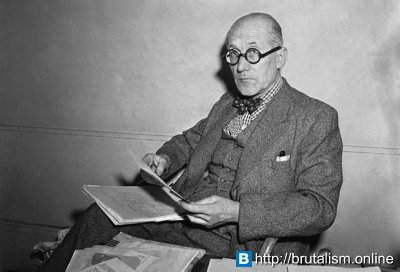
Charles-Édouard Jeanneret-Gris, who was better known as Le Corbusier (French: [lə kɔʁbyzje]; October 6, 1887 – August 27, 1965), was a Swiss-French architect, designer, painter, urban planner, writer, and one of the pioneers of what is now called modern architecture. He was born in Switzerland and became a French citizen in 1930. His career spanned five decades, with his buildings constructed throughout Europe, India, and the Americas.

Dedicated to providing better living conditions for the residents of crowded cities, Le Corbusier was influential in urban planning, and was a founding member of the Congrès international d'architecture moderne (CIAM). Corbusier prepared the master plan for the planned city of Chandigarh in India, and contributed specific designs for several buildings there.

Buildings:

  • Carpenter Center for the Visual Arts, Harvard University, Cambridge, Massachusetts
  • Sainte Marie de La Tourette, Lyon, France
  • Unité d'Habitation de Marseille (Cité Radieuse), Marseille, France

Ernő Goldfinger

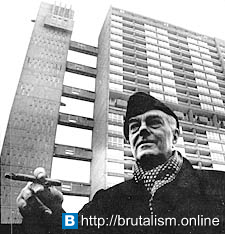
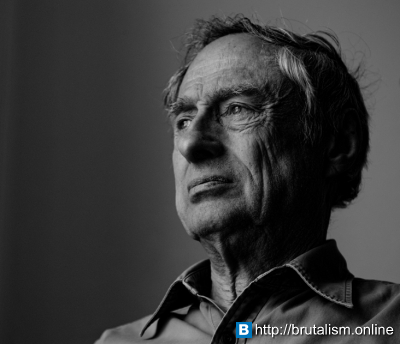
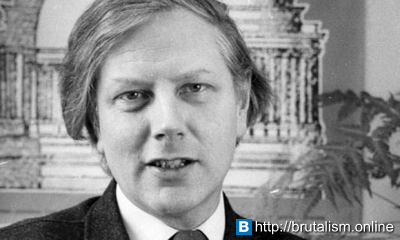
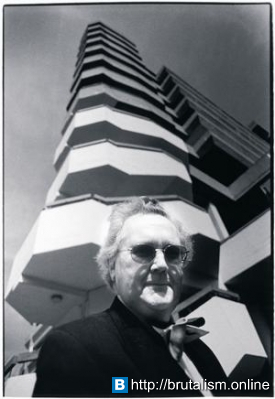
Ernő Goldfinger (11 September 1902 – 15 November 1987) was a Hungarian-born architect and designer of furniture. He moved to the United Kingdom in the 1930s, and became a key member of the architectural Modern Movement. He is most prominently remembered for designing residential tower blocks, some of which are now listed buildings.
Buildings:

  • Balfron Tower, London, England
  • Carradale House, London, England
  • Glenkerry House, London, England
  • Metro Central Heights (Alexander Fleming House), London
  • Trellick Tower, London, England

James Gowan

A Scottish-born architect known for his post-modernist designs of the "engineering style" which influenced a generation of British architects.

Read more …

John Bancroft

John Bancroft (28 October 1928 - 29 August 2011) was a British architect noted for his Brutalist designs for the Greater London Council (GLC).

He joined the Architects’ Department of the GLC in 1957 and led the project to build Pimlico School from 1964 to 1970. The building was demolished in 2010 by Westminster City Council.

Bancroft explained the design of the school in a 2008 interview: "I wanted pupils to feel they were part of a community... So I divided the place up into a form of glass screen so you would get views down from the place that you would get views down from the level you were at down into the other parts of the school. And also I wanted to make sure that you could from time to time glimpse the outside so that you would know where you were in the great surrounding community that Pimlico is, and the buildings surrounding it".

Buildings:

  • Pimlico School, London, England

Kenzō Tange

joomplu:747Kenzō Tange was a Japanese architect, and winner of the 1987 Pritzker Prize for architecture. He was one of the most significant architects of the 20th century, combining traditional Japanese styles with modernism, and designed major buildings on five continents.

Buildings:

  • Yamanashi press and broadcasting centre, Kofu, Japan

Read more …

Owen Luder

Owen Luder, CBE (born 7 August 1928) is a British architect who designed a number of notable and sometimes controversial buildings in the United Kingdom in the 1960s and 1970s, many now demolished. He is a former chairman of the Architects Registration Board and president of the Royal Institute of British Architects. He established his own practice Owen Luder Partnership in 1957, and left in 1987 to form the consultancy Communication In Construction.

Buildings:

  • Tricorn Centre, Portsmouth, England
  • Trinity Square Car Park, Gateshead, England

Rodney Gordon

Rodney Gordon (2 February 1933 – 30 May 2008) was a British architect. He was the primary architect of the Tricorn Centre, Portsmouth, and Trinity Square, Gateshead. Architecturally, his works were primarily in concrete; he was said to be a Brutalist and his buildings have been described as "dramatic, sculptural and enormous" as well as "futuristic".

Buildings:

  • Tricorn Centre, Portsmouth, England
  • Trinity Square Car Park, Gateshead, England

  1. You are here:  
  2. Home
  3. Designers
  • Contact Us
  • Blog
  • Login
  • Register
  • About
  • Privacy Policy
  • External Links
Bootstrap is a front-end framework of Twitter, Inc. Code licensed under MIT License. Font Awesome font licensed under SIL OFL 1.1.